Thursday, 6 September 2012

Best Garden Day

GARDEN DAY ACTIVITY REFLECTION SHEET
This document is a reflection on the purpose, process and outcomes of our Garden Day Activities

ACTIVITY:  Flax Baskets

MATERIALS
(What did we use to carry out the activity?)

  • We used flax.
  • We used a shredder.
  • We used  pegs.

PURPOSE
(Why did we carry out these activities?)

  • to learn how to weave flax baskets
  • To collect the vegetables from the garden

PROCESS
(What we did).

  • We got some flax
  • We got as a group and Missi weaved the flax into a bag with us.
  • We put some pegs on it.
  • Last we used the shredder to cut some of the flax that was sticking out into a thin one.


WHAT WORKED WELL
(What did we do well to make sure our activity was successful?)
  • the patterns.
  • The top of the basket.
  • second time using the shredder to cut the flax.

WHAT DIDN’T WORK WELL
(What do think didn’t work well during your activity?  Why? How did you/could you fix this?)
  • first time using the shredder.
  • starting to make the basket.

WHAT THINGS DID YOU LEARN ?
  • I learnt to weave  flax and I learned to have a great time at making the flax basket.
  • I learnt to share the materials with the people that were helping me.

Wednesday, 29 August 2012

Kiwi Facts


WAL facts about a kiwi for our report writing.
Interesting facts

  • Kiwis can run faster than a human. 
  • Kiwis can grow very big
  • The Kiwi's name doesn't come from its call, but from the Polynesian name for the Bristle- Thighed Curlew, the Kivi.This bird has the same way of feeding as the Kiwi, by poking it's long beak into soft ground.
  • Adult kiwi usually mate for life and they can grow very fast.
  • The kiwi is related to a group of birds called ratites. The closest relatives to kiwi today are emus and cassowaries in Australia, but also the now-extinct moa of New Zealand. 

Wednesday, 22 August 2012

How to grow plants


1.The scientific study of plant life is known as what?
Botany
2. The process of plants using energy from sunlight to turn carbon dioxide into food is known as what?Photosynthesis
3. True or false? In the right conditions bamboo can grow over 60cm (24in) in just one day.True
4. The movement of pollen from the anthers to the stigma of a flower is known as what?Pollination
5. Amber is made from fossilized tree Resin
6. True or false? Humans were on Earth before plants.False
7. What grain has the highest level of worldwide production? (Hint: Rice is second)  Corn or Maize
8. A trailing or climbing plant is also known as a Vine.
9. True or false? Pitcher plants are carnivorous.True
10. The Japanese word “sakura” means the blossoming of what kind of tree?
cherry tree

Thursday, 9 August 2012

How plants can grow.


This is what I think about how plants grow.
We will be doing some experiments to find out if it is true.

1. How much sunlight do plants need to grow?
Lots of sunlight like 100%


2. Can plants grow in the shade? Can they grow inside?
No they can’t because they will die. NO because that would not work for the plants, because there is no sunlight

3. Can plants grow better by talking to them? Why?
No they wouldn’t because they can’t talk

4. Can plants grow in sand? or rocks? Why?
They can grow in none because the water would just go to the sand but not go in plant.And when it is planted to a rock the water would just slip off the rock and nothing would go on the plant.

5. How much water do plants  need to grow? What type of water?
lots and lots of water.Clean water.

6. Can you feed plants food? If yes, what kind?
Yes you can.You can give it carbon dioxide and water.

WAL: about how plants grow best

Wednesday, 8 August 2012

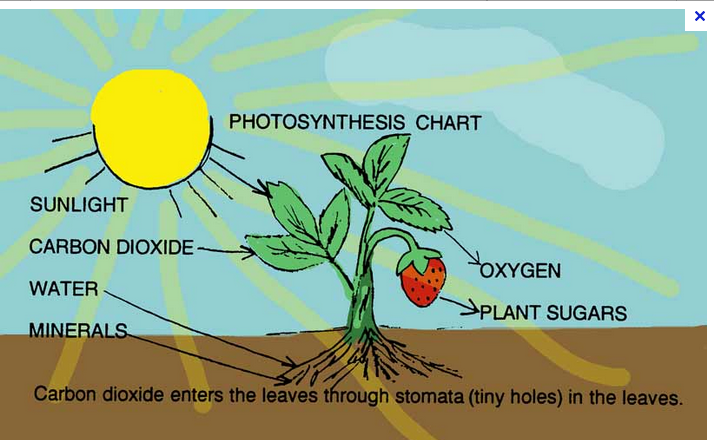
PHOTOSYNTHESIS


WAL about how plants grow and what they need to grow


My explanation of how Photosynthesis works
The plants need carbon dioxide, water and sunlight these things makes sugar so the plant can grow.


Wednesday, 25 July 2012

My Learning Goals


Writing

My goals are:
  • Use a wider variety of sentence beginnings and lengths in my writing.
  • Transfer ideas from my plan in logical order,and include greater details.
  • Proof read my carefully for errors.


Reading

My goals are:
  • Continue to select and read a variety of text types,and contribute to group work and discussion in class.
  • Further develop my inferential skills,as well as the ability to evaluate and interpret material


Maths

My goals are:

  • Continue develop my understanding of place value and all whole numbers.
  • Apply basic addition,subtraction and some multiplication facts to help problem solve.